You've decided to learn a language, but should you enroll in a language school or start online individual lessons? More and more people are choosing online: no time wasted on travel, with a teacher who adapts to them, from the comfort of their own home or office. In this article I explain why individual online work is today the better choice for most students, and when a traditional school still makes sense.
Two Different Philosophies
A language school offers structure and a group: a fixed program, multiple students, an established pace everyone adjusts to. Online individual lessons offer personalization: the whole lesson is adapted to you, your pace, your goal, and your schedule, not the other way around.
That difference in philosophy is why in recent years more and more students, especially adults with a job and family, have turned to online individual lessons. When time is already scarce, a format that adapts to you becomes a huge advantage.
It's worth saying this too: neither format is universally "more serious" than the other. A school isn't by definition more thorough, nor is online by definition more relaxed. What determines how serious the learning is, is the quality of teaching and your consistency, not whether the lesson happens in a classroom or on a screen.
Why More and More People Choose Online Individual Lessons
Individual online work isn't just "school through a screen," it's a different, more focused way of learning. Here's what you actually get.
A Program Tailored Just for You
There's no one-size-fits-all textbook for thirty kids in a class. Topics, pace, and examples follow your goal, whether you need business English, exam prep, or a relaxed conversation before a trip. Every lesson has a purpose that's about you specifically.
Much More Room to Speak
In an individual lesson you don't share time with nine or ten other students. You talk for most of the hour, which is, as I wrote in the article why I understand a foreign language but can't speak it, exactly what builds fluent speech the fastest.
Flexibility and Time Savings
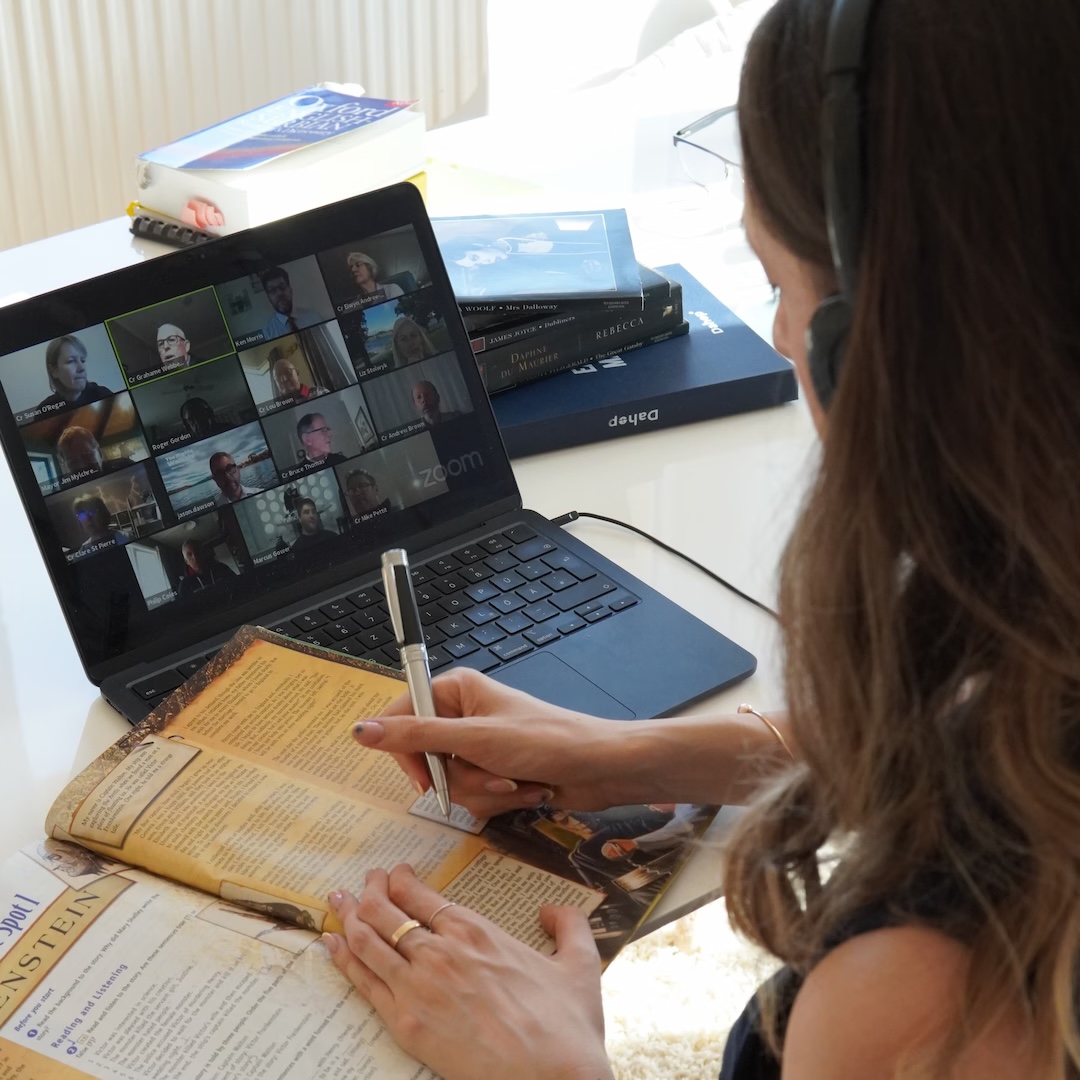
No driving to school and back, no lateness because of traffic. The lesson starts the moment you open your camera, from home, the office, or even while traveling. For many working students, that time saved is the difference between "I have time for the language" and "I don't."
Faster, More Precise Error Correction
The teacher hears and sees only you, so mistakes get corrected immediately, precisely, and without waiting your turn. Over time that feels like much faster progress than in a group, where correcting one person means everyone else waits.
Work From Wherever Suits You
Whether you're in Belgrade, working abroad, or traveling, all you need is internet and a headset. Location stops being an obstacle to consistency, and consistency is, as I wrote in the article five habits that speed up language learning, the single biggest factor in progress.
In practice, that also means a change of city or job no longer has to mean a break in learning. A move, a business trip, or relocating to another country doesn't break the continuity, since the lesson goes with you wherever you take your laptop.
Not sure where to start?
Take our free 50-question test and find out your exact level on the CEFR scale. You get the result instantly, and only then do we build a plan.
Take the Free TestA Common Myth: That Online Teaching Is Less Serious
Many people still think "real" learning happens in a classroom, and that online is some watered-down version. In practice it's often the opposite. An individual online lesson, with a camera, shared screen, and digital materials, can be considerably more intense than a lesson in a crowded group, because there's not a single minute that isn't working for you.
What actually makes the difference isn't the format itself, but whether the teacher holds your attention, adapts the pace, and regularly checks your progress. With a good teacher, an online lesson isn't a compromise compared to a classroom, it's often the better format.
It's worth adding a practical detail too: having your camera on for the whole lesson has a similar effect to sitting in the front row. Attention is higher, contact is more direct, and there's no room to "hide" in a crowd the way you might in a packed classroom.
What a Good Online Lesson Looks Like
For individual online work to actually pay off, a good lesson usually has a few consistent elements:
- A clear goal for the lesson, so every session has a purpose rather than just "doing something."
- Materials tailored to you, not a generic textbook worked through cover to cover.
- Most of the time devoted to speaking, with corrections that don't interrupt the flow of conversation.
- Regular progress tracking, so you always know where you stand and what's next.
When these elements are in place, the comparison with a traditional classroom stops being "online is less" and becomes "online is more focused."
Price Per Lesson Isn't the Same as Price to Your Goal
The first reaction is often that an individual online lesson costs more per hour than a group class at a school, and that's true. But that comparison looks at the wrong number. The question actually worth asking is: how many lessons do I need to reach my goal?
Since the entire online lesson is spent on you, without sharing time and without repeating material you already know, you often reach the same level with fewer lessons than in a group. When you add up the total cost to your goal, rather than the cost per hour, the difference between formats turns out to be much smaller than it first appears, while the time saved and speed of progress remain an advantage of individual online work.
What a Typical Week Looks Like With Online Lessons
To make the format more concrete, here's what a typical week usually looks like for an adult student learning online:
- Two lessons a week with the teacher, at times you choose yourself, with no travel.
- Short daily practice between lessons, using materials tailored to your level.
- Regular feedback, so after every lesson you know exactly what you've improved and what's next.
This kind of rhythm fits into any schedule, even the busiest, since not a single minute is lost on getting there and back, only on the language itself.
When a Language School Makes Sense
If you need fast, measurable progress toward a concrete goal (a job, an exam, a trip) and time savings, individual online work usually wins. If you're looking for a social environment and have the time to go to a school, that's not a bad choice.
How to Choose
Ask yourself: how fast and how targeted a result do I want? How much time do I realistically have, and would I rather spend it traveling to school or actually learning? What's my budget? Do I enjoy the energy of a group, or do I prefer one-on-one focus?
If you need fast, measurable progress toward a concrete goal, a job, an exam, or a trip, individual online work wins in most cases, since every minute of the lesson is spent on you. If a relaxed and cheaper social environment matters most to you, a school or small group is a perfectly reasonable choice.
Final Thoughts
There's no universal "better," there's "better for you." Many people even combine both: a group to build the foundation, individual lessons for the leap. If you're not sure, a free test and a short conversation help you choose the format that realistically fits you. What's certain is that the online way of working is slowly replacing the one in language schools, and once you try it, you won't want to work any other way.
If you'd like to try what a lesson tailored just for you looks like, I'm here to help. In online English lessons and Spanish lessons, we work individually, from the comfort of your home, with a clear plan around your goal. The first step is a free test to see where you're starting from.
Frequently Asked Questions

No. With a good teacher and a camera, an online lesson is just as effective, and it saves time on travel. Many students actually progress faster online.
Per lesson, group lessons are usually cheaper. But individual lessons often produce faster results, so you can reach your goal with fewer lessons overall.
Of course. A common approach is a group for the foundation and individual lessons for a targeted push (e.g. exam prep or business English).
A stable internet connection, a camera, and a headset with a microphone. That's it. Lessons run over Zoom or Google Meet, with no extra equipment or installations.
Yes, with shorter sessions and age-appropriate teaching through play and interaction. Parents especially appreciate not having to drive their child to a lesson and wait outside.