"Is it too early? Is it too late? Will I overload them?" are questions almost every parent asks. The good news is that with a foreign language, it's hard to go wrong by starting early, on one condition: that learning happens through play, not through pressure.
In this article we go through whether there's a "right" age, what research says about early language learning, how to recognize that a child is ready, and how to make their first experience with a foreign language a pleasant one. The goal isn't for your child to "know" the language as fast as possible, but to grow to love it, because that's what carries them forward.
Is There a "Right" Age?
The short answer is: there's no single magic date, but there are periods that carry different advantages. Children pick up language naturally and very early, while for organized learning, meaning actual lessons, 5 to 7 is usually a natural starting point. At that age, a child can follow the structure of a lesson while still absorbing pronunciation without self-consciousness.
That doesn't mean later is bad. School-age children and teenagers make plenty of progress too, they just need a different approach and a clearer goal. And if a child is younger than five, that's perfectly fine too: at that age, "learning" looks like songs, cartoons, and playing in another language, without a single formal lesson.
In other words, the "right" moment is more about the child being interested and relaxed than some number on a calendar.
In practice it looks like this: a three-year-old you play foreign-language songs for is already building an ear for the language, a six-year-old can start real, short lessons through play, and a ten-year-old or teenager works toward a clear goal. Each of them is "on time," just in their own way.
What Research Says About Early Learning
Research agrees on one thing: young children have a special edge when it comes to pronunciation. At an early age the brain easily picks up new sounds and intonation, so children exposed to another language early on later sound more natural, with less of a "foreign" accent.
But the advantage isn't only in accent. Early exposure to a language also builds ease: the language becomes just an ordinary part of the world, like cartoons or toys, not a scary school subject. That ease is exactly what makes it easier for children to speak later without nerves.
It's also worth knowing that older ages have their own strengths. School-age children and teenagers pick up grammar faster and can learn consciously, since they already understand how language works. So no age is "wasted," each one just needs the approach that suits it.
So don't let talk of a "closing window" scare you. That window refers to a perfect accent, not the ability to learn a language. For what most parents actually want, which is for their child to speak fluently and confidently, there's plenty of time at any age.
What a Child Gains by Starting Early
An early, relaxed start gives children several lasting advantages:
- Natural pronunciation. Younger children pick up the accent and melody of a language more easily.
- Ease. The language becomes a normal part of everyday life, without nerves or pressure.
- Confidence. Early small successes build a positive relationship with the language for life.
- Easier reading and writing later. By the time letters come along, the child already has an ear for the language, so everything moves faster.
Most importantly of all, a child who connects a language with something enjoyable simply wants more of it. And that inner motivation is worth more than any lesson schedule.
Not sure where to start?
Take our free 50-question test and find out your exact level on the CEFR scale. You get the result instantly, and only then do we build a plan.
Take the Free TestSigns a Child Is Ready for Lessons
Instead of just looking at age, pay attention to whether the child shows these signs of readiness:
- Can focus on one activity for at least 15 to 20 minutes.
- Follows simple instructions and likes games with rules.
- Shows curiosity about the language: sings songs, repeats words from cartoons, asks what something means.
- Enjoys stories, picture books, and songs.
If most of this applies, the child is probably ready, regardless of whether they're exactly five or seven. If not, there's no problem waiting a few months, since readiness comes on its own.
And conversely, if a child still finds it hard to sit still or shows resistance, that's not a flaw, it's a sign they currently need more play and less structure. Forcing it at that stage usually does more harm than good.
Preschoolers, School-Age Kids, and Teenagers: A Different Approach
There's no single method for all children. What delights a preschooler will bore a teenager, and vice versa. That's why we adapt the approach to age.
Preschoolers
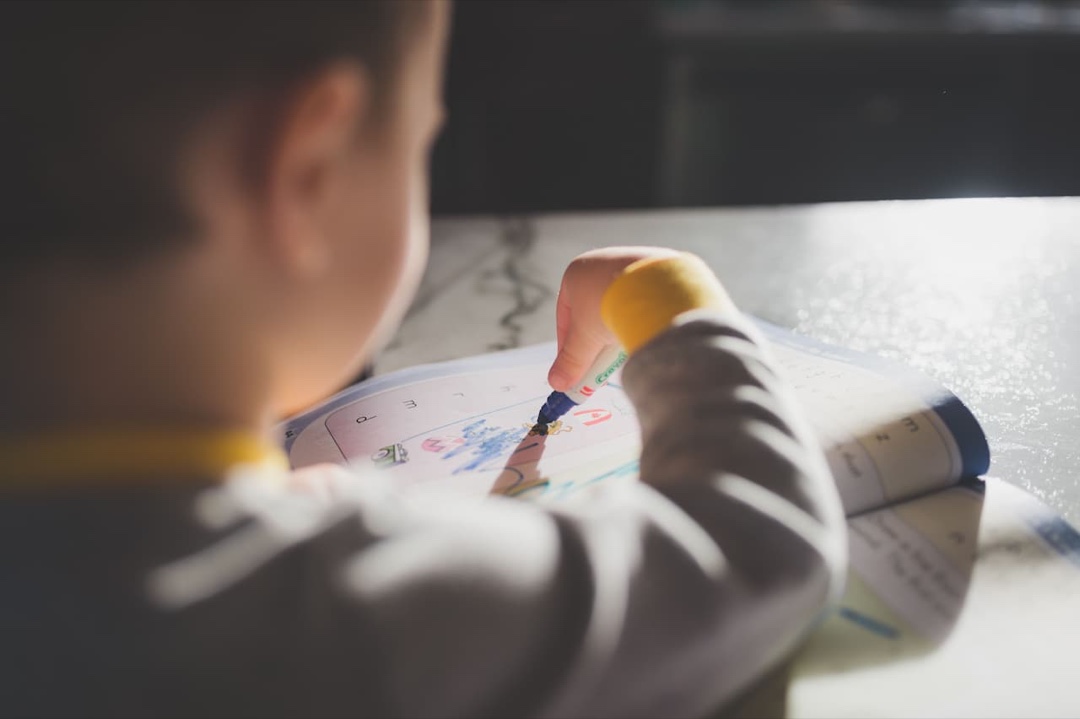
They learn through songs, pictures, movement, and play, in short sessions. The goal isn't grammar, but getting the language into their ear and making it fun.
School-Age Children
They combine play with early reading and writing, supporting what they're doing at school. They like challenges and reward systems, so progress can be both visible and fun.
Teenagers
They respond best to topics close to them: music, games, social media, shows. With a clear goal, like better grades, an exam, or travel, plus topics they care about, motivation grows on its own.
Regardless of age, the principle is the same: the lesson is built around the child, not the child around the lesson. When the method follows how the child learns and what interests them, progress comes naturally.
How to Make Learning Play, Not a Chore
Regardless of age, the same principles protect a child's motivation:
- Short, regular sessions instead of long, exhausting lessons.
- Topics the child loves: a favorite cartoon, sports, games, animals.
- Praise for effort, not just results, since effort is what the child can actually control.
- No comparisons with other children, since every child progresses at their own pace.
- The language at home through fun: cartoons in another language, songs, simple word games.
When learning is connected to fun, a child doesn't feel they "have to," but that they "want to," and that changes everything.
How a Parent Can Help at Home
You don't need to know the language yourself to support your child. What helps most is creating an environment where the language is present and enjoyable.
- Play cartoons and songs in another language. Regular exposure through content the child loves is worth more than any amount of quizzing.
- Make it part of the routine. One song before bed or a favorite cartoon in another language on weekends builds a habit without pressure.
- Show interest, not control. Ask your child to teach you a new word instead of testing them. Kids love being in the "teacher" role.
- Celebrate effort. Praise your child when they try to say something in the language, even if they get it wrong.
Your job isn't to be a teacher, but to make the language a normal, welcome part of family life.
Common Mistakes Parents Make
With the best intentions, parents sometimes do exactly what kills motivation. Here's what to avoid:
- Too much pressure. Constantly asking "what did you learn today" quickly turns the language into an obligation.
- Comparing with other children. It undermines confidence and creates resistance.
- Lessons that are too long. A child's attention span is short, so twice for half an hour beats once for two hours.
- Focusing only on grades. If the only goal is a top grade, the joy disappears, and with it, lasting motivation.
- Giving up too soon. A bad day or a phase isn't a sign that "it's not working," children need time and consistency.
What If the Child Is Already a Teenager?
If you're reading this and your child is already twelve or fifteen, there's no reason to worry that you've "missed it." Teenagers learn differently, but not worse. In fact, they pick up grammar faster than young children and can work toward a concrete goal.
The key is topics and motivation. When the material connects to what interests them, along with a clear goal like grades, an exam, or travel, teenagers progress remarkably fast. I've also written about how age isn't a barrier in the article is it too late to start learning a language.
Final Thoughts
What matters most isn't an exact date, but that a child's first experience with a foreign language is a pleasant one. A child who connects the language with fun will keep going on their own, and that's half the job. Age matters less than approach: with play, patience, and a bit of consistency, almost every child grows to love the language.
If you're not sure whether your child is ready or how to start, I'm here to help. Whether it's English or Spanish for children, I build the lesson around the child's age, attention span, and interests, with regular reports to parents. The first step is a short conversation and a trial lesson, which quickly show where to begin.
Frequently Asked Questions

School gives a foundation, but classes are large and the pace is the same for everyone. Extra work in a small group or one-on-one builds speech and confidence much faster.
No. Children are excellent at keeping languages separate; bilingualism is an advantage, not a burden.
For younger children, shorter lessons (30 to 45 minutes) twice a week give the best balance of attention and progress.
Through play, songs, and cartoons, from the earliest age. For real, organized lessons, 5 to 7 is usually a natural starting point, but the child's readiness and interest matter more than an exact age.
No, they don't need to wait. Children are excellent at keeping languages separate and can build their native and foreign language in parallel. Learning a foreign language won't harm Serbian, on the contrary, it strengthens a general feel for language.